
Discover Audiology: Understanding Pure Tone Audiometry

Updated: Sep 28
Key Highlights
Pure tone audiometry is a main hearing test. It helps to find the softest sounds you can hear at different pitches and supports the finding of hearing loss. This test does not hurt, is not invasive, and is often done in a soundproof booth with headphones. Sometimes, bone conduction equipment is also used. Audiology services are important because they help spot hearing loss, which can sometimes lead to speech and language problems. When you get hearing difficulties checked with the right testing and help, audiology services can help improve or support the development of speech and language skills.
The test does not hurt, is not invasive, and is done in a soundproof booth with headphones. If needed, bone conduction equipment is also used.
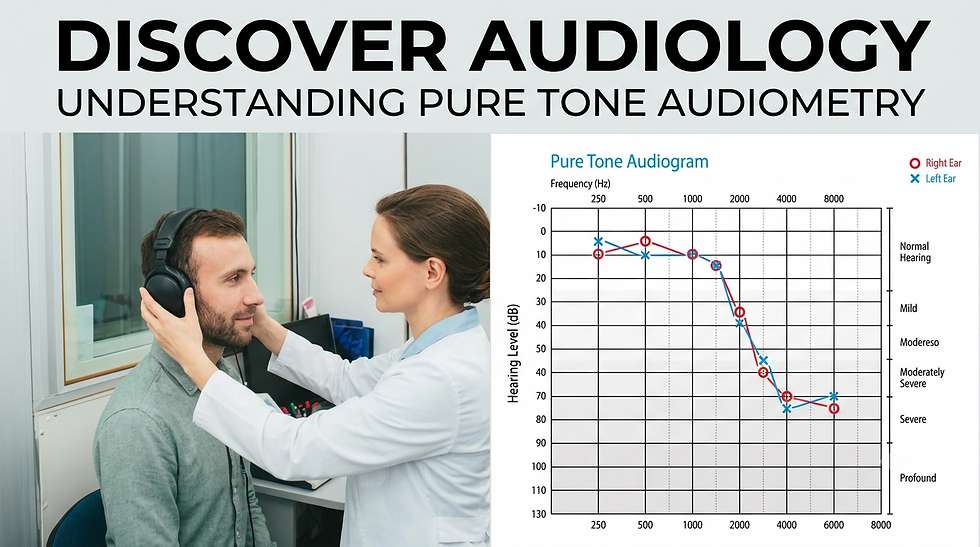
A professional will put your test results on an audiogram. This graph helps the audiologist see your hearing limits and what kind of hearing loss you may have. If you want to check your hearing at home, there are some online hearing tests, but these usually just screen for hearing loss. They do not include special checks like bone conduction testing. Audiology services may also use otoscopy, speech testing, tympanometry, and bone conduction testing to give you a more full check of your hearing health.
Audiology services may include otoscopy, speech testing, tympanometry, and bone conduction testing to give you a more full check of your hearing health.
If you see problems with your hearing, tinnitus, feel pressure, or have trouble following speech
Introduction
Audiology is about hearing, balance, and problems that come from them. An audiologist is a healthcare worker who helps people with these issues. If you notice that you do not hear well, find it hard to follow speech, or hear ringing in your ears, then it is a good idea to get checked. A full hearing checkup is usually the first thing you should do to understand more and get the right help. Good hearing helps you talk with other people, feel safe, work, and feel comfortable every day. So you should not ignore even small changes in your hearing.
A hearing test does more than just show if your hearing is worse. It helps show which kind of trouble you have with your ears, and what steps you can take next. At places like Emirates Hearing Care, you can get a hearing checkup and advice that fits with your problems, how you live your life, and what you will need for the future.
Understanding Pure Tone Audiometry
Pure tone audiometry is one of the most common tools used to find out if you have hearing loss. It shows your hearing range by testing how well you hear different sounds and how soft a sound you can catch. This hearing test is a common choice when checking for hearing problems in both grown-ups and kids, as long as they can follow the test steps.
In Dubai, both ENT specialists and audiologists look after ear health, but they have different jobs. ENT specialists are doctors who find and treat problems with the ear, nose, and throat. Audiologists, on the other hand, are health professionals trained to check hearing and balance problems. They use tests like pure tone audiometry to help you with your hearing and balance.
An audiologist or doctor of audiology uses what they find to see if sound gets to the inner ear the right way. These tests also show if there is a problem with the outer ear, the middle ear, or the nerve that helps you hear. The results tell the next steps for your care. To see why the test is helpful, it is good to know what the test is and how people who check hearing use it in their daily work.
What Is Pure Tone Audiometry and Why Is It Important?
Pure tone audiometry is a test to find out how you hear different sounds. It helps the doctor check how well you hear tones at many pitches and loudness levels. You will wear earphones, and sounds will play. You need to say or show when you hear each sound. This helps the audiologist read how good your hearing is and write it down on an audiogram. If you want to know what happens during a hearing test at an audiology clinic, this is a big part of it.
Pure tone audiometry is important because it can show if someone has a hearing problem. It helps you know if your hearing is where it should be, or if there’s a problem in one ear, both ears, or not at all. This test can also tell what kind of hearing loss is happening, like conductive, sensorineural, or mixed hearing loss. If you use it along with a bone conduction test, you can see even more about the type of hearing loss.
Test results are also important because they help doctors decide what to do next. The results can show if you need to see a doctor, keep coming back for more checks, or try hearing aids to help you talk with others. In a clinic, pure tone audiometry is easy to use, well-organized, and helpful. It gives hearing experts a good place to start when planning your hearing care. That is why people still use it as a key part of hearing tests today.
The Role of Audiologists in Hearing Care
Audiologists are trained to check and help with hearing loss, ringing in the ears, and balance problems for people of any age. In simple words, they give audiology services that find out what is causing trouble with your hearing and what can help make it better. A doctor of audiology or a skilled hearing expert may do hearing tests, speech tests, middle ear tests, and give support with hearing devices as part of their care.
You should think about seeing an audiologist if you find it hard to hear things, ask people to say things again, turn the volume up a lot, or feel pressure, ringing, or feel dizzy. These can be signs of hearing problems that should be checked by a professional. Children, adults, and older adults can all get help from an assessment if their talking and listening skills are not as good, or when changes to hearing make everyday life harder.
Beyond testing, audiologists help make test results easy to understand. They may talk about ways to protect your ears, have check-ups over time, use hearing aids, or send you to a doctor if you need more help. At places like Emirates Hearing Care, they also give advice about hearing aids UAE choices, hearing aid tools, and options like widex hearing aids when you need more sound. Their job is to help you hear better, talk with others more, and feel good about the choices you make for your hearing health.
Who Should Consider a Pure Tone Audiometry Test?
A pure tone audiometry test is good for anyone who sees or feels changes in hearing that make daily life harder. You should get this hearing test if you feel that speech does not sound clear, talking on the phone is tough, or you do not hear alarms and alerts. It is also good if you hear ringing in your ears, feel like your ears are blocked, or have trouble hearing in one or both ears.
Many people wait too long before they get help. This wait can make talking with others feel more hard. It can happen at home, at work, or when you are out with friends. Getting your hearing checked early can show you what is going on and if you need more care. In the next parts, you will read about the main signs to look for and which age groups should get tested most.
Signs of Hearing Loss That Warrant Assessment
The signs of hearing loss are not always easy to spot. A lot of the time, they show up slowly. People may first notice these signs when talking to others, talking on the phone, or when they are in a place with noise in the background. Audiologists watch out for signs that can point to hearing problems, other hearing issues, or balance problems that may need more testing.
Common symptoms of hearing loss include:
Often asking people to say things again
Hard to keep up with talking when there is a lot of sound around
Ringing, buzzing, or other signs of tinnitus
Needing to turn up how loud your devices are
Feeling like your ear is full, under pressure, or blocked
Feeling dizzy or having trouble with balance while your hearing goes down
Another warning sign is staying away from people because listening is hard or makes you feel stressed. Some people feel like speech sounds are not clear, or they hear sound but can't make out the words. If these things feel true for you, you should not wait for a hearing checkup. A test like this can show if the problem is with the outer ear, middle ear, or inner ear. It can also tell which kind of help for hearing loss will work best.
Age Groups and Individuals Who Benefit from Pure Tone Hearing Tests
Pure tone hearing tests can help many people, not only those who look like they have trouble hearing. Children may need this test if parents or teachers worry about how they listen, how they hear talking, or if they get a lot of ear problems. A hearing checkup can show if lower hearing is making it hard for children to learn, talk with others, or pay attention in daily life.
Adults can also get help when changes in hearing start to make work calls, meetings, or talking with family hard. Some people go for tests after being around loud noise. Others go when they begin to notice things get worse with time, hear ringing, or feel their ear is full. Even if signs look small, a hearing test by a pro can show where things stand at first and if you need to check again soon.
Older people are an important group to think about. Hearing loss often happens as you get older and can come on slowly. A test can help you know why it is harder to understand what people say, especially when you are in loud places. It can also help you talk better with others and feel good in your day-to-day life if you get help at the right time. If you are in one of these groups, or if someone close to you notices your hearing is different, it is a good idea to see an audiologist.
Preparing for a Pure Tone Hearing Test in the UAE
Getting ready for a hearing test in the UAE is easy, but a little plan can make things easier. Good hearing care in Dubai starts when you pick a hearing clinic that gives full checkups. You also want clinics with audiologists who know what they are doing and will explain your results in a clear way.
You should pick a place that has step-by-step audiology services, new testing tools, and a calm place that cares about the comfort of people.
Before you go to your appointment, take some time to think about your medical history. Think about your current symptoms and when they started. It is also good to write down if you have had ear infections, head injuries, what medicine you use, or if anyone in your family has hearing loss. Clinics like Emirates Hearing Care can use this information to give you a hearing checkup that fits your needs. This will help you get the most out of your visit. The next two sections talk about what to do before your visit, and what will happen when you get there.
How to Get Ready for Your Audiometry Hearing Test
You do not need to do anything special to get set for an audiometry hearing test. However, if you get your things in order, your audiologist can know your worries faster. At a hearing clinic, you first talk about your symptoms, way of life, and hearing care history. This helps make the checkup better. It can also help you get more out of the test.
Before you go for your visit, try to get these things ready:
A short review of your medical history, like ear infections or head injuries
A list of current problems, such as ringing in the ears, feeling blocked, or not hearing words well
Details on when you first noticed trouble with your hearing and if it started fast or slow
Information about the medicines you take all the time
Notes on whether you have used hearing devices in the past or been around loud noise
You should also be set to talk about family history and the listening troubles you face each day. If you have used hearing aids in the past, tell them that too. Some people ask if an online hearing test is as good as seeing a clinic. A screening you do at home can help you see there may be a problem, but it does not give you the full checkup that an in-person audiology test can. For a good hearing test UAE patients can rely on, seeing a professional is still the best way.
What to Bring and Expect at the Hearing Clinic Dubai
When you get to a hearing clinic in Dubai, your visit will start with some questions about your hearing and if you have any symptoms. A specialist will then check your ear and give you a hearing test. The whole process is set up to be calm, easy, and clear so you feel comfortable every step of the way.
It helps to bring:
Medical details and any hearing test records you have
A list of the symptoms that change the way you talk with people every day
Info about drugs you take and past ear issues
All hearing devices or hearing aid accessories you use now
During the visit, the audiologist may start by looking at your ear canal and outer ear. They use an otoscope to see if there is wax, fluid, or any other problems. After this, testing might include pure tone audiometry, speech testing, bone conduction testing, or tympanometry. The test you get will depend on your symptoms. At providers like Emirates Hearing Care, you will be in a professional place with each part of the process explained clearly. You will also get useful advice after your test is done. For people who want pure tone audiometry Dubai or wider hearing assessment UAE services, this step-by-step way makes the experience clear and gives you peace of mind.
Pure Tone Audiometry Test Procedure Explained
The pure tone audiometry test is simple. Each step is important. This hearing test checks how soft a sound you can hear at several tone frequencies. The test will show your hearing levels and give the audiologist what they need to read your results in a clear and easy way.
Sometimes, bone conduction testing is added to see how sound moves through the ear and the skull. This can help show if the problem is in the outer ear, middle ear, inner ear, or with the nerve for hearing. The next parts will show each step and tell what makes air and bone conduction methods not the same.
Step-by-Step Overview of the Pure Tone Hearing Test Procedure
A pure tone hearing test often begins after a short talk about your symptoms and health background. The audiologist tells you what will happen and then puts headphones on your ears. The test happens in a quiet room or soundproof booth. You will listen to sounds with different pitches and loudness. Each time you hear something, you need to reply. The test helps find out the softest sound you can hear at every tone.
As you take the test, every answer you give is put down. Later, the numbers are put on an audiogram. This shows how well you hear with each ear. Sometimes, the audiologist will test one ear first and then the other. The scores are then compared side by side. These details help the audiologist know if you have a hearing problem. They also help find out if more checks are needed.
Step | What happens |
Medical review | The audiologist asks about symptoms, onset, medications, and past ear problems |
Ear check | Otoscopy may be done to inspect the outer ear and ear canal |
Headphone testing | Tones are played through headphones during pure tone audiometry |
Patient response | You press a button or raise a hand when you hear a sound |
Recording findings | Hearing thresholds are marked on an audiogram |
Result discussion | The audiologist explains test results and next steps |
Air and Bone Conduction Testing with Headphones and Bone Vibrator
Air conduction and bone conduction are two parts of a hearing test. They help show where a hearing problem is in the ear. In air conduction testing, sounds move through headphones into the outer ear. Then, the sound goes through the middle ear and into the inner ear. This is what happens when you hear sounds in your daily life. It is also an important part of pure tone audiometry.
Bone conduction testing is not the same as other hearing tests. A small gadget, called a bone vibrator, goes behind your ear. It sends little shakes through your skull right to the inner ear. This way, the sound does not use the outer or middle parts of your ear.
The audiologist can look at both air conduction and bone conduction test results. By doing this, they can see if sound is getting stopped before it gets to the cochlea. They can also know if there is a problem with the sensory pathway in your ear.
This test helps find different types of hearing loss, like conductive hearing loss, sensorineural hearing loss, and mixed hearing loss. But pure tone audiometry cannot answer every question by itself. People often use it with speech testing, tympanometry, or other special tests to get a better idea of how your hearing works. That is why audiologists use it as an important part of a hearing checkup, but not as the only way to know if your ears are healthy.
Conclusion
To sum up, pure tone audiometry is an important way to check your hearing and find out if you have any hearing loss. When you understand why this test matters and how it works, you can make better choices for your hearing health. If you feel you have hearing problems or if you want to get a routine checkup, you should see an audiologist. They will give you good advice that fits what you need. Make your hearing a top priority. A pure tone hearing test can be a smart part of your health plan. If you have questions or want some help, reach out to us. We are here to help with your hearing.
Frequently Asked Questions
Is Pure Tone Audiometry Painful and How Long Does It Take?
Pure tone audiometry will not hurt you. This is a simple hearing test where you listen to sounds. You wear headphones or another device during the test. You will be asked to say when you hear a sound. Most people feel good during the test. The time it takes can change if there are any other checks, but this test is usually quick and easy. After the test, the audiologist goes over your results with you. The audiologist will talk about what your results mean for your hearing and what can be done next if you need any help.
Can Pure Tone Audiometry Detect All Types of Hearing Loss?
Pure tone audiometry can help find many problems with hearing. This test can show the main types of hearing loss. These include conductive, sensorineural, and mixed patterns. When you look at both air and bone conduction, you can get better facts about hearing loss. Still, this test does not give all the answers by itself. Audiologists use other tests too. They often use speech testing, tympanometry, or other checks. All these help give a better look at a person’s hearing. So, this test is really important. But to know the full story, you need to look at the results of different hearing tests together when needed.
What Do Pure Tone Audiometry Test Results Mean for Hearing Health?
Your pure tone hearing test will show the quietest sounds you can hear at different notes or levels. The results are shown on a chart called an audiogram. By looking at this, the audiologist can see if you have a hearing problem, how bad it is, and if it is in one ear or both ears. This is important for your hearing health, because the results help decide what to do next in your hearing care. You may need to come back for checks, talk with a doctor, get advice on how to talk or get hearing support like hearing aids if you need them.
How do I become an audiologist?
To work as an audiologist, you need to get a Doctor of Audiology (Au.D.) degree. You first finish a bachelor's degree and then go on for more training in this field. After this, you must get a license. Some people also choose to get a certificate from groups like the American Speech-Language-Hearing Association (ASHA) to add to their skills.


Comments